

I traveled from Ahmedabad to Mumbai for the SQL Server 2008 R2 Launch event on June 11, 2010, with a laser show, PowerPivot demos and great networking.

SQL Server 2025 Editions: What Express and Standard Can Do Now
Compare SQL Server 2025 editions, inspect Express and Standard limits, identify the installed edition, and review database portability.

SQL SERVER – Difference Between DATETIME and DATETIME2 – WITH GETDATE
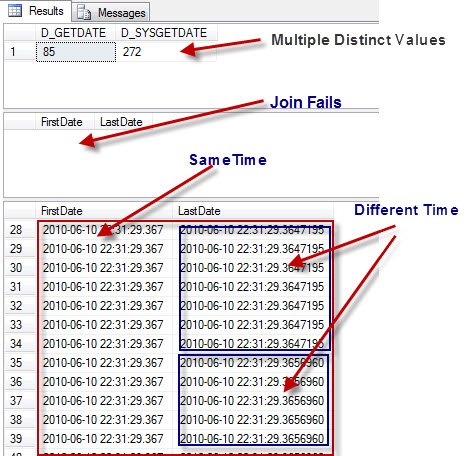
I repeat my DATETIME and DATETIME2 test with GETDATE instead of SYSDATETIME. See how the distinct values in each column compare this time.
SQL SERVER – Difference Between DATETIME and DATETIME2
A developer filled a DATETIME and a DATETIME2 column with the same value and got different results. Here is the difference between DATETIME and DATETIME2.

SQL SERVER – Difference Between GETDATE and SYSDATETIME
What is the difference between GETDATE and SYSDATETIME? GETDATE stops at milliseconds, while SYSDATETIME in SQL Server 2008 goes much finer.

SQL SERVER – Fastest Way to Restore Database
A few days ago, I received following email from blog reader where the question was about the fastest way to restore database.

SQL SERVER – MERGE Insert Update and Delete with an Isolated Example
Merge Operations can combine conditional inserts, updates and deletes. I inspect the plan before making any claim about scans or speed.
SQL SERVER – Subquery or Join – Various Options – SQL Server Engine Knows the Best – Part 2
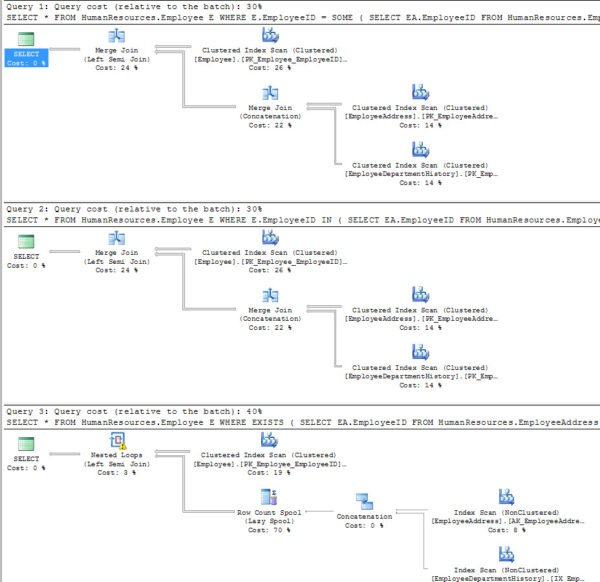
In part 2, Paulo R. Pereira compares IN, EXISTS, SOME and JOIN plans, and shows again that the SQL Server Engine knows the best plan for a query.
SQL SERVER – Subquery or Join – Various Options – SQL Server Engine knows the Best
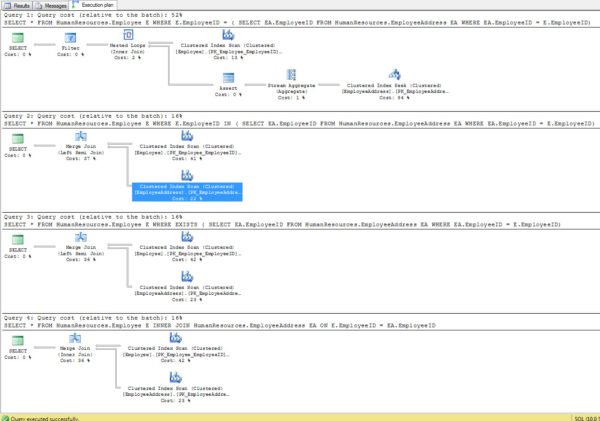
Subquery or join, IN or EXISTS? Four queries return the same result, and the execution plans show the SQL Server engine knows the best way to run them.

SQL SERVER – Convert IN to EXISTS – Performance Talk
A training attendee asked for a simple way to convert IN to EXISTS for better performance. Here is my example with the execution plans.