
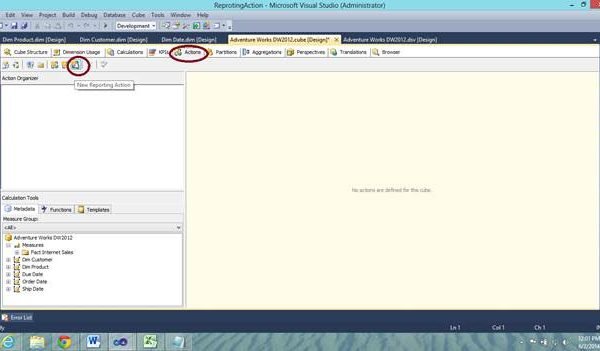
SSAS actions let users open a report, a web page or drill through from cube data. Here is what actions are and how to build a Reporting Action step by step.

SQL SERVER – Planned and Unplanned Availability Group Failovers – Notes from the Field #031
In Notes from the Field #031, John Sterrett explains Planned and Unplanned Availability Group failovers in AlwaysOn, a topic that confuses many DBAs.

Explain a SQL Server Index in Sixty Seconds, Then Prove It
How to explain a SQL Server index in an interview in about a minute, then prove every word with one table. On SQL Server 2025, the same query read 5,737 pages with no index, 133 with a plain index and 3 with a covering index. Three extra indexes doubled the log of 20,000 inserts.

Restoring One Table: Restore a Copy and Move the Rows Back
Learn restoring one table by restoring a separate database copy, choosing a recovery point, and safely moving reviewed rows back.

Vertical Partitioning: Moving Rarely Used Columns Off a Hot Table
Moving rarely used columns to a side table can cut reads, or change nothing. Here is how to measure it and what it costs your writes.

Casting JSON Arrays to the vector Type for Embeddings
A cast checks the count of numbers, not the model they came from. Here is a simple staging pattern that loads good rows and reports the rest.

NT SERVICE Accounts in sysadmin: What They Are For
A security scan wants those service logins gone. Here is how to see what each one is for before you click Delete.
MySQL – Introduction to User Defined Variables
MySQL user defined variables let you store a value and use it later in your query, with no data type to declare. Here is how to set and read them.
SQL SERVER – Merge Two Columns into a Single Column
A reader wanted to merge two columns into a single column that lists all values from both. Here is the simple query I suggested for the task.

SQL SERVER – Parsing SSIS Catalog Messages – Notes from the Field #030
The SSIS Catalog captures a lot of cool information by default. Andy Leonard shares the query he uses for parsing SSIS Catalog messages in SSISDB.