Technical debt used to grow only as fast as people could type. AI removed that limit, and most companies haven’t noticed the balance climbing.

The term technical debt was born on a financial software project. In 1992, Ward Cunningham compared shipping rushed code to borrowing money. The idea was simple. A little debt speeds you up, as long as you pay it back quickly.
For three decades, one thing kept that debt in check, and almost nobody gave it credit. People are slow. A developer under deadline pressure could only cut so many corners in a day.
That speed limit is gone. AI coding assistants let anyone borrow as much code as they want, instantly, and nobody has set a credit limit.
The Speed Limit Nobody Noticed
Think about how debt used to arrive. A tired developer copied a class on a Friday, changed four lines and shipped it. Now there were two nearly identical classes, and every future fix had to land in both.
That shortcut cost someone an hour. A busy team might create a few dozen of them in a year. Annoying, but survivable, because a person could still hold the mess in their head.
Old debt also looked like debt. It came with leftover variable names, commented-out blocks and a function called processDataFinalV2. Reviewers saw the mess and slowed down.
The Early Warning Signs
Imagine handing every employee a corporate card with no limit and reviewing the statements once a year. That’s roughly where many engineering organizations are with AI today.
Ask engineering leaders how it’s going, and you’ll often hear the same answer. Output is up sharply. Delivery speed isn’t. Teams write more code than ever, but releases don’t arrive much faster.
Cleanup work is quietly shrinking, because generating something new is quicker than fixing what already exists. And when production breaks, the failing code is more often something nobody on the team wrote by hand.
The first symptom is friction. Estimates stretch, and simple changes touch more files than they should. Senior engineers spend more of the week reading code than writing it.
Most of what AI writes is clean, well named and neatly commented. That’s what makes this kind of debt so hard to catch.
Debt That Passes Review
Ask an assistant for a service and you get a complete one in ninety seconds. Ask for eleven variations and you get eleven. Each has its own error handling, its own retry logic and its own way of parsing the same date.
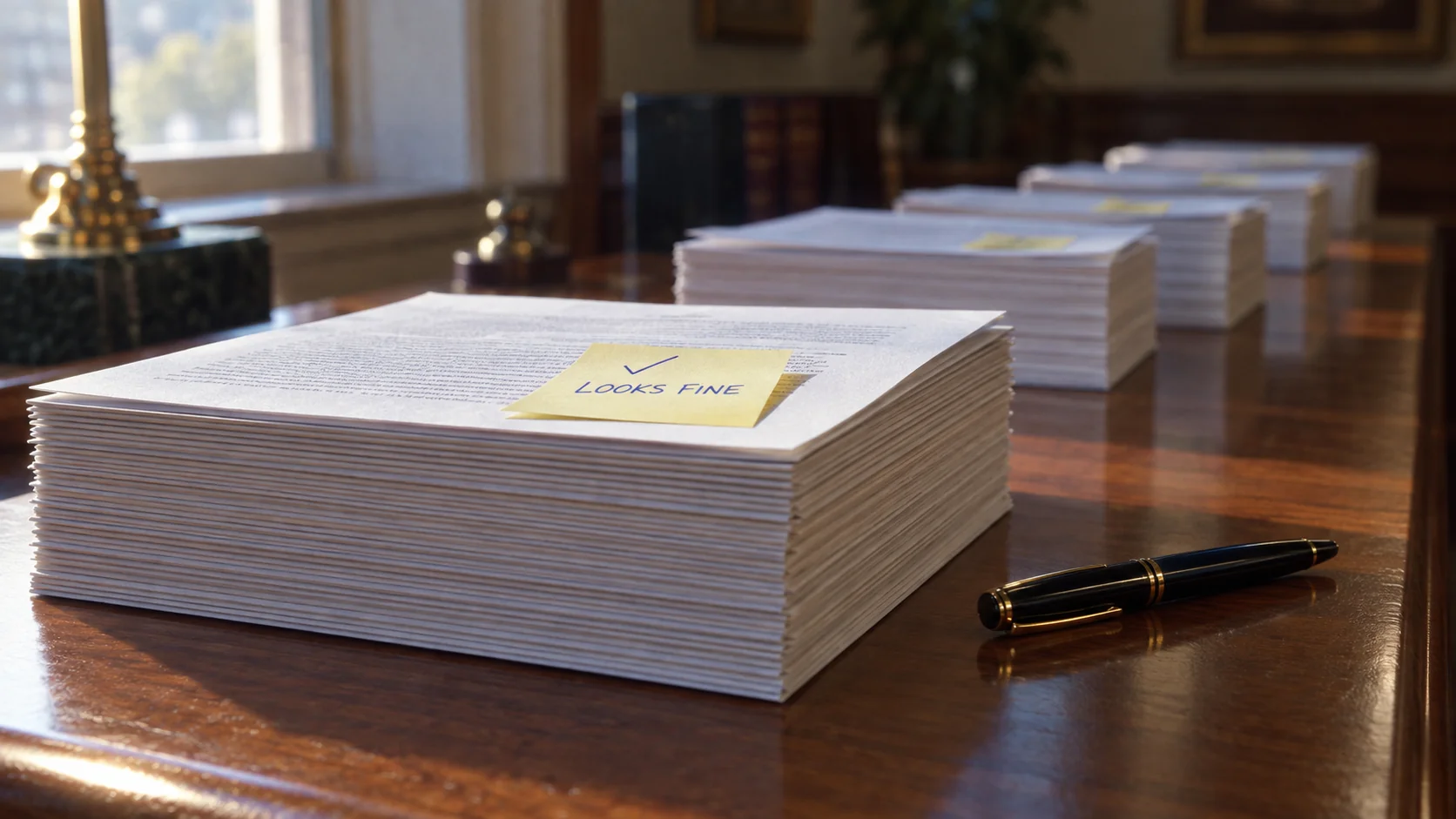
Every one of them looks like a careful engineer wrote it on a good day. So it sails through review. Four kinds of debt are growing fastest.
Duplication with variation. Six versions of the same idea, each slightly different. Nobody can delete any of them, because each one has a caller that might depend on its quirks.
Architecture nobody agreed to. Four developers generate four components in one week and end up with four design opinions. All of them are reasonable. None of them were discussed.
Code nobody has read. It was reviewed quickly because it looked fine, then merged and shipped. When it fails at 2 a.m., nobody on the call understands it, not even the person who committed it.
Dependencies nobody chose. A generated fix pulls in a new library. Now it’s in your build, your security scans and your license reviews, and nobody made that decision on purpose.
Why the Usual Safeguards Miss It
Code review was tuned for two things: manageable volume and visible mess. AI broke both. There is more to review, and all of it looks fine.
Linters and static analysis come back green, because generated code is tidy and rarely makes classic mistakes. Test coverage goes up too, since the tests are generated alongside the code. Tests written from the same misunderstanding only confirm the misunderstanding, thoroughly.
So every dashboard says quality improved. Some of it did. The dashboards can’t tell you which part.
The Liability Nobody Books

Cunningham’s original point was that the interest on technical debt is paid in time. Every hour spent working around code you don’t trust is a payment.
AI adds a quieter liability: code the company owns but nobody understands. It doesn’t show up in any tool. It shows up during an outage, or when a two-day change takes three weeks.
Ask your team one uncomfortable question. Which parts of our system could nobody debug with confidence at 3 a.m.? That list is your real risk register, and it won’t match anything in your tooling.
What Smart Leaders Are Doing Now
I’m not suggesting anyone stop. I use these tools every day, and my work is better for it. The goal is to put back the limit AI quietly removed.
Make authors explain their code. The most effective rule I’ve seen teams adopt is simple. Whoever submits a change must be able to walk through any part of it, unaided, in review. That restores the speed limit, because understanding still runs at human speed.
Put a budget on borrowing. Cap how much generated code a single change can carry, the way a finance team sets credit limits. Small batches have been good engineering advice for years. AI makes that advice urgent.
Decide structure once, on purpose. Where code lives, how errors are handled and which patterns are standard should be written down by people. Otherwise the assistant invents a fresh answer every time someone asks.
Track understanding next to coverage. Keep a list of the parts of the system at least two people can explain. Treat everything else as debt, whatever the coverage report says.
Reward deletion. When producing code is nearly free, the scarce skill is removing it. Give someone the explicit job of turning six near-duplicate implementations into one. That work has rarely been celebrated. It’s about to be the most valuable engineering on the team.
The Bill Comes Due Later

Debt has a delay built in. You don’t feel it when you borrow. You feel it eighteen months later, when a one-day change takes three weeks. It has to be made in six places, and nobody’s sure which six.
Most teams are less than two years into generating code at this pace. Right now, everything feels productive, and that feeling is real. It’s also exactly how borrowing feels on the day you borrow.
The protection we relied on was never our discipline. It was that making a mess took effort. That effort is gone, so the discipline has to be real now.
Take one question to your next leadership meeting. If the AI assistants went dark for a month, how much of your system could your team still explain?
I wrote about the human side of this in Competence Debt. It’s an essay about the understanding a team never builds when a tool does the work. It’s one of thirty essays in my book AI: Nobody’s in There. But we’re still in here. All of them are free to read online, and the paperback is on Amazon.
The danger is not bad code, it is good code that nobody understands.
Published by Pinal Dave on SQLAuthority. More of my work at pinaldave.com.
Discover more from SQL Authority with Pinal Dave
Subscribe to get the latest posts sent to your email.