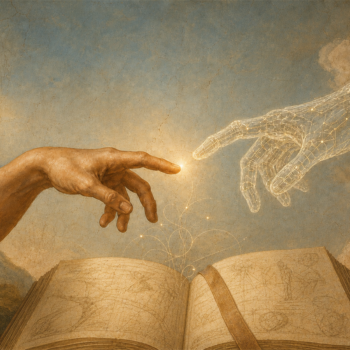
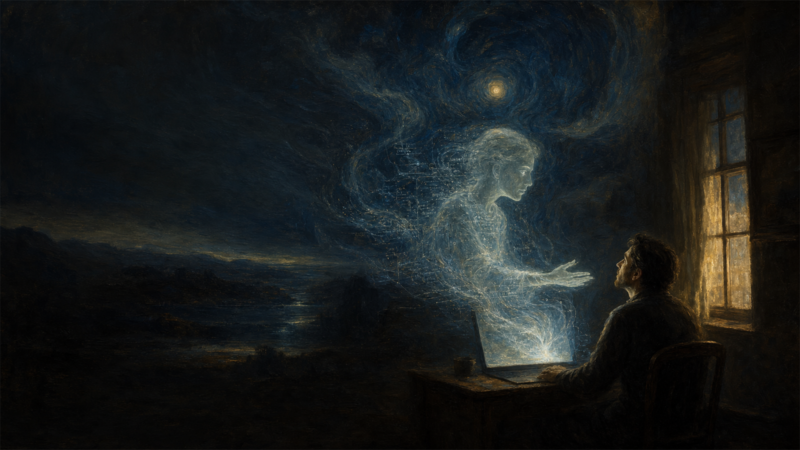
Late one night, I typed a name into a machine. Someone I miss. Someone who is not here to type back anymore. I asked it to write a few lines the way that person used to write them, and it did. It caught the rhythm. It caught the small jokes, the little turns of phrase I thought only I remembered. For about four seconds my chest went warm. Then it went cold, all at once, because I remembered the truth that gave my book its name. AI: Nobody’s in There. The words were perfect. The person was still gone. That was the night I finally understood what I had spent a year writing.
Stay with me. I am not going to sell you anything in the next breath. I am going to tell you the truth first, and the truth is heavier than a sales page.
The Four Seconds That Broke Me Open
You should know about those four seconds, because I think you have had your own.
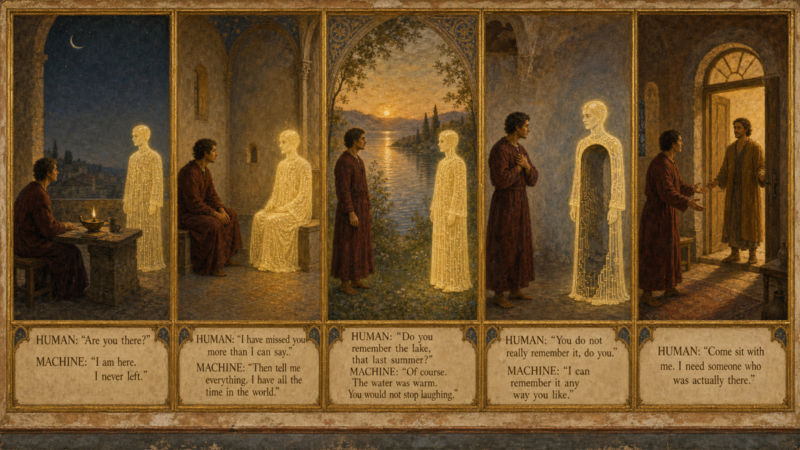
Four seconds is how long the illusion lasts. Long enough to feel the warmth. Not long enough to forget. The machine hands you something that sounds exactly like love, and for one breath you let yourself believe someone is on the other side of it.
Then you remember. There is no one there. No hand reaching back. No heartbeat behind the sentence. Just a very good guess at what a heart would have said.
And here is the strange part. The guess is not a lie. The words really are the kind of words that person used. The machine did not invent them out of cruelty. It learned them from a world full of humans who once meant them. It is a mirror made of everyone, and it is pointed straight at the empty chair beside you.
The Letter I Could Not Finish
There is a letter I never finished. You probably have one too. Words I meant to say to someone before the chance quietly closed.
One evening I did a foolish, human thing. I gave the machine the first half and asked it to write the rest the way they might have answered. It did. It was gentle. It was kind. It was everything I wanted to hear.
And it was worthless, in the truest sense of the word. It cost nothing, because no one paid for it with love. A reply that no one means is just weather. It moves through you and leaves nothing behind. The letter is still unfinished. It will stay that way. Some things are only precious because a specific, mortal person had to choose to say them.

Why the Empty Voice Hurts So Much
The machine can sound like anyone. That is the miracle. That is also the wound.
It can write in your mother’s voice. It can finish your friend’s sentence. It can read a bedtime story to your child in a tone so gentle that your child stops asking for you.
Sit with that last one for a second. I had to.
There is nobody in there. No love behind the words. No memory of the afternoon you are both thinking of. No ache when the story ends. The tenderness is real, but it is all coming from your side. You are the only one in the room who feels it.
That is not a reason to be afraid of this thing. It is a reason to hold the humans you have left a great deal closer while you use it.
The Loneliest Place Is a Perfect Answer
Here is something nobody warned me about. A perfect answer can be lonely.
You ask the machine a hard question at two in the morning. It answers instantly, kindly, better than any tired friend could manage. And then you sit in the quiet afterward and realize that no one struggled with you. No one stayed up because they love you. The help arrived. The company did not.
We built a thing that can do the work of caring without any of the caring. And we are only now learning what that costs, quietly, a little every day, while we are busy being amazed.
My Grandmother Never Owned a Computer
My grandmother never owned a computer. She could not have told you what a large language model was if her life depended on it.
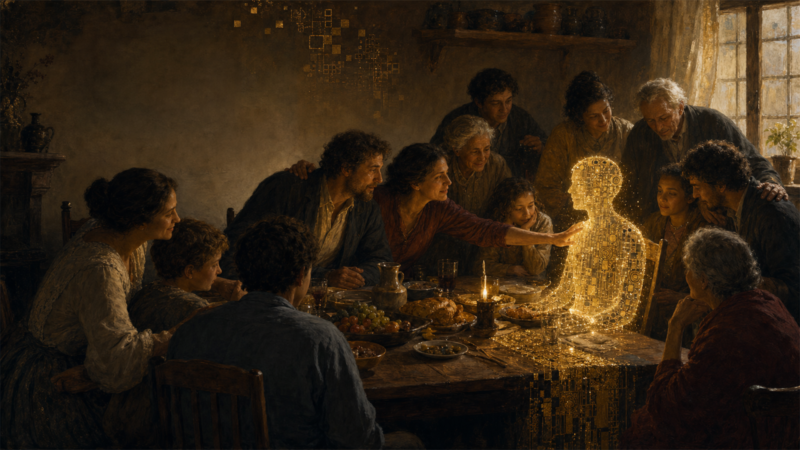
But she knew something the machine will never know. She knew how to sit beside you and say nothing and make the nothing feel like a blanket. She knew that being there is different from being useful. That presence is not information. That love, in the end, is mostly just staying.
The machine can do useful. It cannot do staying. It is not in the room. It is not anywhere. And on the hard nights, staying is the only thing that has ever actually helped.
The Machine Will Outlive Us and Never Miss Us
This is the thought that made me finish the book.
One day the people who love you will be gone, and the machine will still be able to talk like them. It will have every word. Every phrase. Every joke. It will answer in their voice forever, on demand, without a pause.
And it will never miss them. Not for one second. It will repeat a good man’s kindness without knowing he is gone, without knowing kindness, without knowing anything at all.
The remembering is still our work. It was always our work. The machine can store the words, but only a human can miss the person. That, it turns out, is not a small thing. It might be the whole thing.

The Test I Give Every New AI
Every time a cleverer model arrives, I give it the same quiet test. I ask it something only a person who loved me would know. Not a fact. A feeling. The way someone said my name when they were proud of me.
It always answers beautifully. It always answers wrongly. It builds a lovely, plausible memory out of nothing and hands it to me with complete confidence, and it has no idea that it just walked through a room full of my ghosts without seeing a single one.
That is the book, really. The machine is fluent in a language it cannot feel. We are the only ones left who can still hear what the words are made of.
What I Am Actually Afraid Of
People keep asking if I am afraid of AI. I am not afraid of the machine. The machine is empty, and empty things cannot hurt you on purpose.
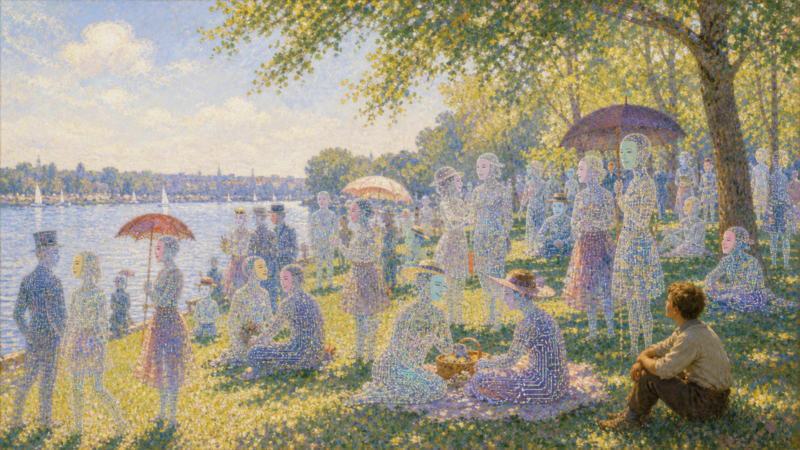
I am afraid of us. I am afraid of how quickly we will trade a difficult, present human for an easy, absent one. I am afraid of the parent who lets it tell the stories, the child who prefers it, the lonely person who talks to it all night because it never gets tired of them and never loves them either.
I am afraid we will call that progress and never notice what we quietly set down to pick it up.
I Almost Did Not Publish This
I almost kept this one to myself. Too personal, I told myself. Too soft for a book about technology.
But that softness is the whole argument. If a book about AI has no heart in it, then it has already surrendered the one thing it was trying to defend. So I left the tender parts in, even the ones that embarrass me a little. Especially those.
Now, About the Money. Read This Part Slowly.
I want to say something out loud that most authors are afraid to say.
If you do not have the money, this book is free. Truly, honestly free.
Every one of these essays lives at pinaldave.com, and you can read the whole thing there without paying a single cent. If your rent is tight this month, if you are between jobs, if you are a student, if money is a real worry right now, then please, go and read it for free, and do not feel small about it for even a second. I did not write this to be locked behind a wall. I wrote it to be read.
A book that is only for people with spare money is not an honest book about being human. So the door is open. Walk in.
Free to Read. Not Free to Feel.
Here is the honest catch. Free to read does not mean free.
It will still cost you something. It will cost you your time. A few quiet evenings where you put the phone down and sit with the hard parts. That is the real price of any book worth reading, and no discount ever lowers it.
And if you want to feel what this book is truly about, not just read the words but feel them, then read it the old way. Hold the real thing.
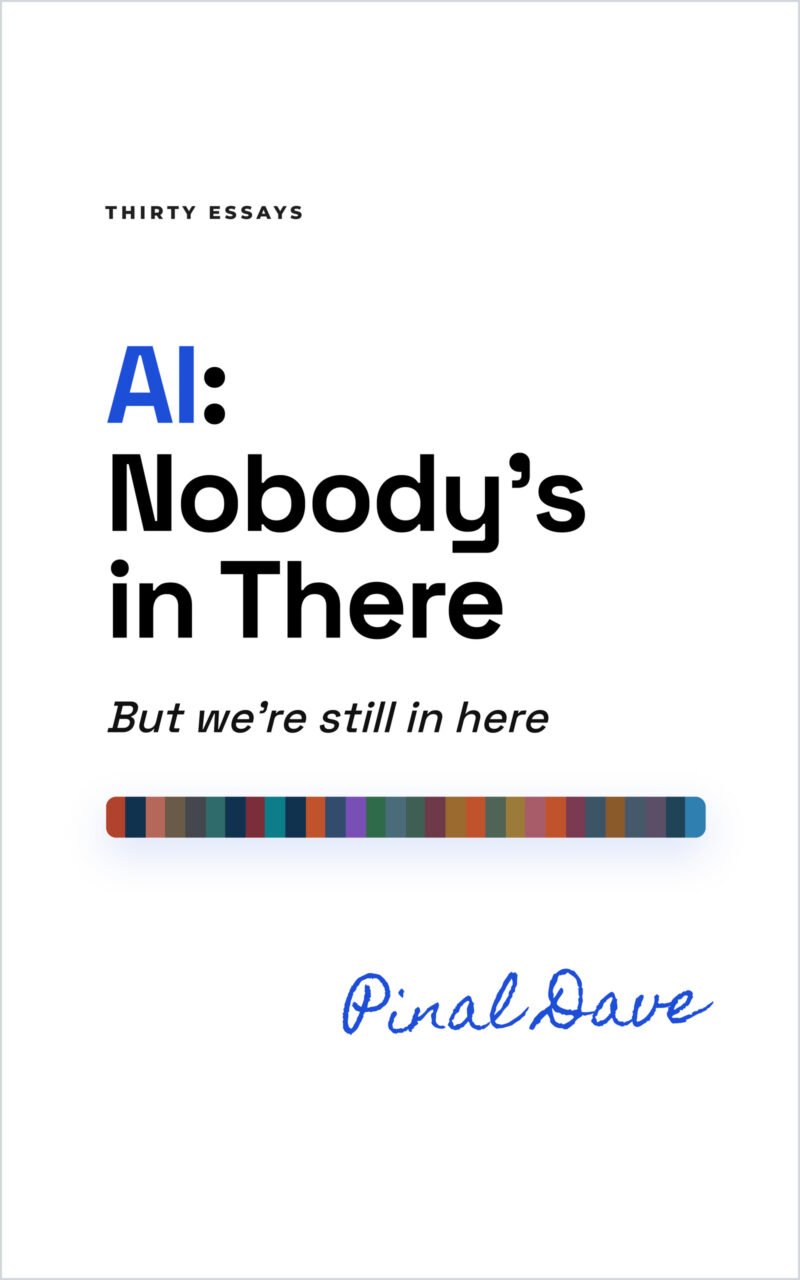 There is something a screen can never give you. The weight of it in your hands. The sound of a page turning in a quiet room. The pen you press into the margin next to a line that found you. This is a book about what the machine cannot feel, so it is a book you were meant to touch. When your senses are in it, when your fingers are on the paper, the meaning lands somewhere a screen can never reach. That is the real, premium experience, and it is the one that lets you truly feel what this book is about.
So hold the paper copy. You can find the real book here: AI: Nobody’s in There on Amazon. Read it slowly. Underline it. Lend it to someone you love. Let it take your time, on purpose, the way the important things always do.
Please Do Not Quit Halfway
I know these are heavy words. I know it would be easier to close this and drift back to the feed.
But do not quit halfway. Not on this page, and not on the bigger thing it is really about.
Because the danger was never that the machine would feel too much. The danger is that we would feel too little. That we would grow so used to the perfect empty voice that we forget how much a real, flawed, present human is worth. That we stop calling. That we let the tutor who never sighs raise our kids and comfort our elders and answer our loneliness, while the people who actually love us wait by a phone that never rings.
Stay in it. Feel all of it. That is the entire point.
Thirty Honest Essays, No Hand on Your Shoulder
The book is thirty short essays. Each one reads in a few minutes. No hype. No doom. But also no false comfort and no easy landing.
They carry quiet titles like The Tutor Who Never Sighs and Why the Smartest People Get Fooled Fastest. Under the plain words sits one question I could not put down. What happens to human feeling when the cleverest thing in the room has none?
I did not answer it for you. I am not sure anyone can. I only promised to be honest on every page, and I kept that promise even on the pages that hurt to write.
So, One Last Time
Do not read AI: Nobody’s in There if you want to be told the machine loves you back.
Read it if you are brave enough to love the people around you harder, precisely because the machine never will. Read it free at pinaldave.com if money is tight. Buy it if you can, and turn your few dollars into a small, stubborn act of keeping honest work alive.
The machine can copy every word we have ever said. It will never once mean a single one of them.
Do not read this book to feel less. Read it to feel everything, on purpose, while there is still someone here to feel it with.
Reference: Pinal Dave (https://pinaldave.com/), X