Understanding your customer starts before you touch a keyboard. For a consultant or a DBA, it is the quiet half of the work. The technical half is easy to see. The other half decides whether the technical half solves the right problem.
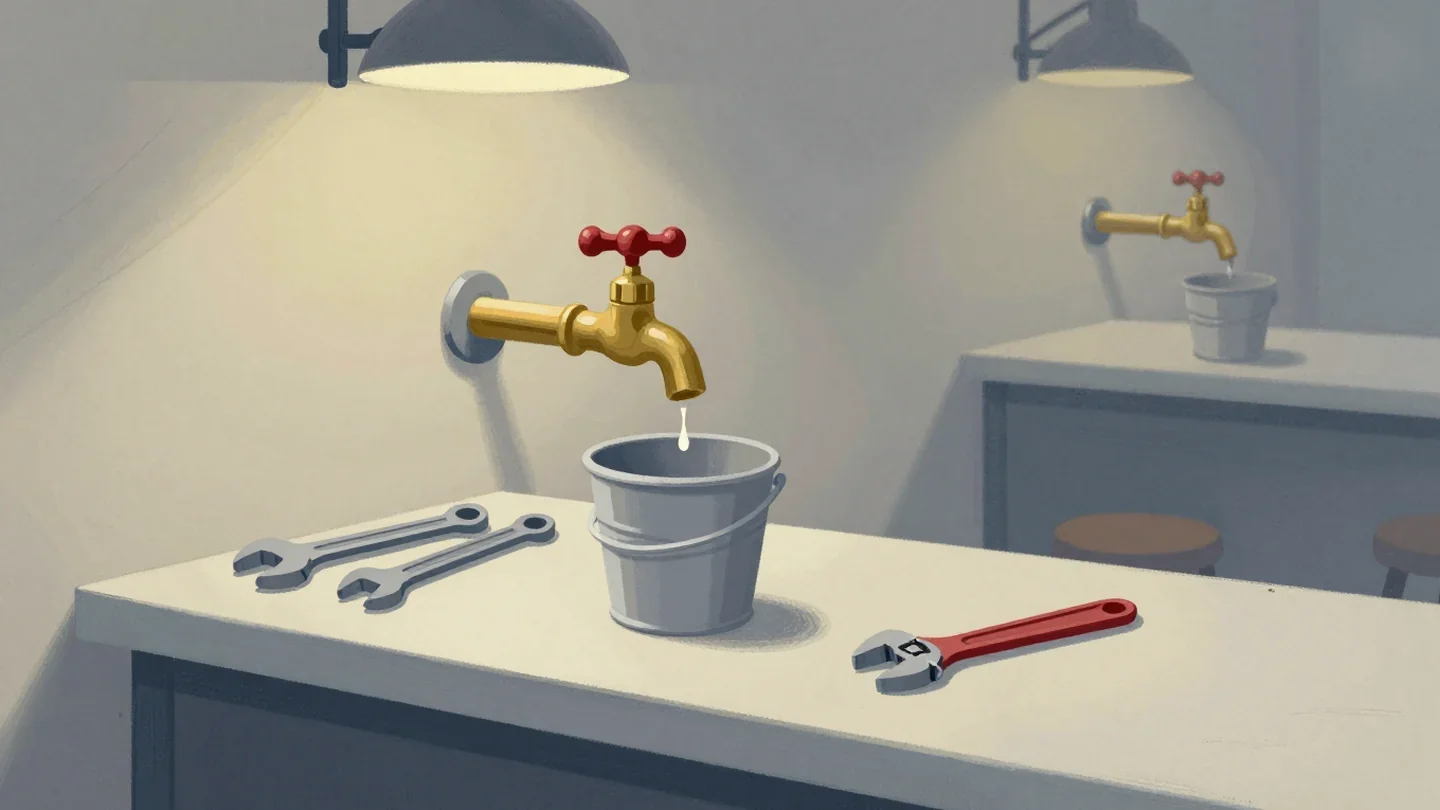
The Dripping Tap Is Not the Problem
Think of a plumber called to a house with a dripping tap. The drip is what the homeowner can see and hear. It is a symptom. The cause is somewhere behind the wall, and only a plumber who listens to the whole story will find it.
Understanding your customer begins with seeing what they see. They call with the drip. The query is slow, the report is late, the server is down. They describe what hurts, and that is the right thing for them to do. Your job is to hear the drip, then work back to the pipe.
Information Alone Is Not Enough
A customer in trouble wants relief now. Many of them search the web and apply the first answer that looks right. That works in the short term, because the drip stops. It doesn't touch the root cause, so the drip comes back in a different tap.
This is where a consultant earns the fee. A fix without an explanation is a lucky guess. A fix with a logical explanation is knowledge the customer keeps. Customers value the second one far more, because they can now spot the next drip themselves. Give the solution and the reason together.
Hearing Is Not Listening
Hearing happens by itself. Listening is work. We have two ears and one mouth, and that is a fair ratio to follow. You can hear every word a customer says and still miss what they mean.
The danger is a quick conclusion. You have seen a similar symptom before, so you reach for the tool that fixed it last time. A plumber who grabs the pipe cutter before asking a single question can cut the wrong pipe. A fact you didn't ask for can change the entire scope of the job.
Good questions are plain. What changed, and when? What have you already tried? What does done look like for you? Repeat the answer back in your own words. If the customer says yes, that is exactly it, you understand the problem. If they correct you, you have saved a day of work in the wrong direction.
My Scoping Call
Before every consultation, I hold a scoping or preparation call. I want to learn four things. What problem will I be solving? How much time will it take? Which scripts am I likely to run? What is the reason behind the solution I expect?
The call is the formal part of understanding your customer. The customer feels heard before any work starts. I walk into the engagement with a map, not a guess. If the picture changes during the work, we both know why.
Pick the Plain Wrench
In the picture above, a set of fancy tools sits unused beside one plain red wrench. The wrench is the one that stops the drip. Customers don't pay for the number of tools you own. They pay for the right one.
The same holds in database work. The clever trick that impresses another DBA is not what a customer needs. A plain index, a corrected setting or a rewritten query that anyone on their team can read is worth more. Choose the simplest tool that fits the problem you have understood.
Isn't Listening Too Slow in an Emergency?
You could argue that when the server is down, there is no time for a conversation. That is a fair point, and an emergency changes the order of things. Ask two questions first: what is broken, and what changed. Then take the safest first step, one that reads and changes nothing, while the customer keeps talking.
What you can't do is skip the listening altogether. A customer in an emergency leaves out the key detail more easily. They are under pressure. A calm question brings that detail out.
What to Remember
Understanding your customer takes a few plain habits. Hear the drip, then look for the pipe. Give the solution with its reason. Listen before you conclude, repeat back what you heard, and use the plain tool that fits.
Consulting is a service business, and service starts with attention. Your customers don't want a performance. They want to see that you understood them, and then they want the tap to stop dripping.
Understanding a customer is not a soft skill added to the work, it is the first step of the work.
Published by Pinal Dave on SQLAuthority. More of my work at pinaldave.com.
Discover more from SQL Authority with Pinal Dave
Subscribe to get the latest posts sent to your email.