
Sharing what you know feels like it should leave you with less. It doesn’t. This year, I published a post every single day, and the habit taught me something I didn’t expect. Knowledge works like a village well. The more people draw from it, the faster it fills.
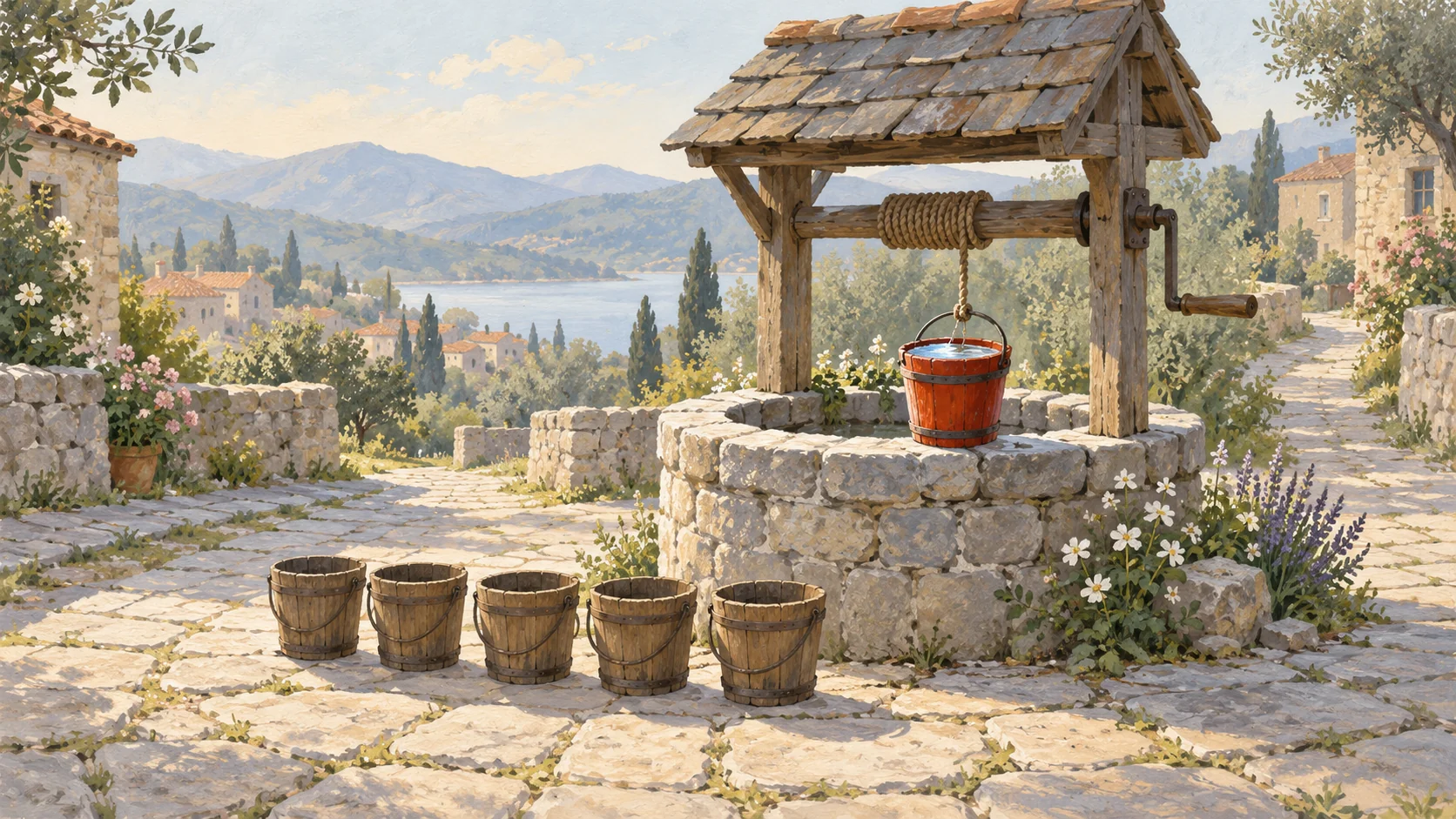
The Well in the Village
Picture an old village well. Nobody owns the water. Everyone walks up, lowers a bucket and carries home what they need. A stranger would guess the well runs dry with all that use.
It does the opposite. A well that nobody draws from goes stale. The water sits still and the walls collect moss. A busy well stays fresh, because new water keeps flowing in to replace what people take.
What you know works the same way. Keep it locked away, and it grows stale and out of date. Share it every day, and you’re forced to keep it fresh.
Drawing Water Makes You Check the Rope
Every morning at 7 AM, I hit the publish button. Before that button, there was always a small worry. Was this right? Was it clear? Would it help anyone?
That worry is the useful part. When you write something down for strangers, the gaps in your understanding show up fast. A fuzzy idea that felt fine in your head falls apart on the page. So you test it again, read the documentation again, and run the query one more time.
There’s a second benefit hidden in that worry. Explaining a topic to a beginner means you can’t hide behind jargon. You have to find the plain words, and finding them is the moment you understand the idea. If you can’t explain it in plain words yet, the post isn’t the problem. The understanding is.
Teaching is the rope and bucket. You can’t lower a bucket into a well you don’t understand. Each time you share something, you check the rope first, and you come away knowing the well better than before.
The Bucket Comes Back Fuller
Here’s the part nobody tells you about giving knowledge away. People give back. A reader leaves a comment with a faster way to solve the same problem. Another points out an edge case I missed. A third asks a question that turns into next week’s post.
I lower one bucket, and it comes back with more water than I put in. The comments section of a blog is a crowd of people at the same well, each one adding a little. Over time, the well holds far more than any one person could have dug alone.
The same thing happened with books. Writing three books in three months was exhausting. But every reader who wrote back with a question or a correction made the next edition better.
The Fear of an Empty Well
There’s a fair objection to all of this. If you give away everything you know, why would anyone pay you? Isn’t your knowledge your living? Many professionals guard their best tricks for exactly that reason.
I understand the fear, and some work should be paid. A well feeds a village, but someone still has to tend the fields. Free posts teach the idea. Paid work applies it to one person’s specific problem, under pressure, with their data.
In practice, the free well brings people to the fields. Someone who learned from a post trusts you before you ever meet. Guarding the well doesn’t protect your living. It only makes the water go stale while the village walks to another well.
Small Buckets Count
Most people never share because they think their bucket is too small. Surely someone has already written about this error message. Surely an expert knows a better way. So the note stays in a private folder, and the next person hits the same wall alone.
Small buckets are what keep a well busy. A short post about one error, one setting or one query saves someone an afternoon. Nobody needs you to know everything. They need the one thing you learned yesterday, written down plainly.
Starting is simple. Write down the problem you solved this week, the steps that worked and the one that didn’t. Share it where the people who need it will look. Then do it again next week. The habit matters far more than the size of any single bucket.
Keeping the Well Clean
One rule matters more than the rest. Whatever you put in a shared well, someone will drink. So test what you share before you share it. When you get something wrong, and you will, fix it in public and thank the person who caught it.
A clean well earns trust. A well with one bad bucket gets avoided for years.
What to Remember
Share what you know, even when it feels small. Writing it down sharpens your own understanding. The people who read it will give back more than you expect, and the well stays fresh because it’s used.
As this year ends, that’s the habit I want to keep. Lower the bucket every day, and keep the water clean.
Knowledge is not a jar you guard, it is a well that fills when you draw from it.
Published by Pinal Dave on SQLAuthority. More of my work at pinaldave.com.
Discover more from SQL Authority with Pinal Dave
Subscribe to get the latest posts sent to your email.


6 Comments. Leave new
Congratulations on a good year! I’ve ever commented before, but I’ve sure as hell used your blog many times. So thank you for the work you do!
Hi pinal sir,
Wish you a very happy new year :)
Regard$
Chirag Satasiya
Wish you A very Happy and prosperous New Year to all !!
Hii sir..
Can you show an exmaple of how to implement locks on transactions
1. shared lock
2. update lock
etc…
waiting for your reply….
thanks
Nirav Chheda
Hi,
With this New Year I decided to read as much as possible technical books and I started and completed your book of interview questions and answers…
Dear Sir,
we are running 7 different databases in on server [Server configuration Intel Xeon 2.53Ghz]. databases sizes are following
Name Db_Size
A 181.94 MB
B 70.50 MB
D 60138.00 MB
E 156.44 MB
F 4369.38 MB
G 156281.13 MB
H 434.19 MB
My question is when doing a single process [update,select] in database G always getting struck database D. so did index in database G but no feel any performance different. Hard disk spaces also available. so dear sir please give me the better solution to that.