A PHP page should not build SQL by joining strings from a form. Connecting PHP to SQL Server works best with the supported driver, bound parameters, and a narrow database identity. Get that path right before tuning the page.

Choose an Interface for Connecting PHP to SQL Server
Microsoft provides SQLSRV and PDO_SQLSRV extensions for PHP. Both use the Microsoft ODBC Driver for SQL Server underneath, but their programming interfaces differ. Choose the one that fits the existing application and supported PHP release. Confirm extension and ODBC driver versions together. A current PHP extension paired with an incompatible ODBC layer will not become stable through query changes.
I first inspect what the deployed PHP process loads. Command-line PHP and the web server can use different configuration files. Run the module check from the relevant environment, then verify a request through the web application. Which runtime serves production traffic? That answer matters more than the extension shown in a developer terminal.
REM Command line
php -m
Keep Authentication Out of Page Source
When connecting PHP to SQL Server, use a dedicated application identity with only the database rights the site needs. Store credentials in the approved secret mechanism, not in a PHP file copied with the site or in a repository. Windows integrated authentication can be appropriate when the hosting identity and environment support it. Whichever mode you choose, document who rotates or revokes it.
I test under the web server’s real identity. A local command run under my account can pass while the page fails. Do not fix that by granting broad database roles to the hosting account. Check the target database, login mapping, and permissions on the specific view or procedure that failed.
Bind Every User-Supplied Value
PDO_SQLSRV supports prepared statements with named or positional parameters. SQLSRV supports parameter arrays. Bind values rather than concatenating strings into SQL. This protects the SQL structure and makes type handling more predictable. Use native prepared statements where the application behavior expects server-side parameter binding, and test edge cases such as TOP parameters or date values with the selected driver.
A bound parameter cannot replace an object name. If the user can choose a sort column, select from a fixed allowlist and build only that trusted identifier into the query. I check this path in code review because a well-parameterized WHERE clause does not make a dynamic ORDER BY safe by itself.
Return Only the Rows the Page Needs
A web page should ask for a bounded result set with explicit columns and a stable ordering. Fetch rows as the page needs them and close or free the result before issuing another query on the same connection. The drivers can support multiple active result sets, but leaving open cursors consumes resources. A narrow SELECT is simpler to cache and easier to index.
I watch for pages that execute one query per displayed row. That pattern turns a modest result into many network round trips. A set-based query or one carefully designed procedure can do the work with fewer calls. Measure the page and the server request together. A fast SQL statement repeated hundreds of times is still a slow page.

Check the Session After Connecting PHP to SQL Server
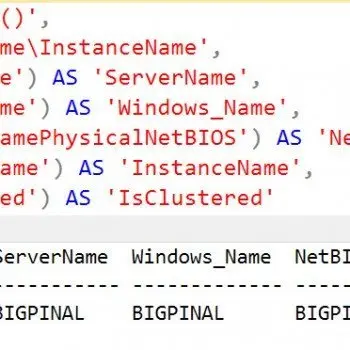
The T-SQL query below reports the current login, database, and transport properties. Run it through a protected diagnostic endpoint in a test environment, then remove that endpoint. Do not display login or server details to ordinary site visitors. The query helps confirm that the PHP request uses the expected connection settings after deployment.
I compare this result with the intended application identity before looking at query plans. An unexpected login can explain both permission failures and inconsistent row visibility. Use the exact web path, since command-line PHP can carry different environment variables and connection settings.
SELECT
    ORIGINAL_LOGIN() AS LoginName,
    DB_NAME() AS DatabaseName,
    c.encrypt_option,
    c.auth_scheme
FROM sys.dm_exec_connections AS c
WHERE c.session_id = @@SPID;
Keep Transactions Short
When a request changes several related rows, start a transaction, run parameterized statements, and commit only after the operation succeeds. Roll back on error. Do not hold a transaction open while sending an email, waiting for another service, or rendering a page. Long transactions can block other work and grow the log.
I look for error handling that catches an exception but forgets to roll back. The page can appear friendly while the connection stays in an unexpected state. Test a deliberate constraint failure and inspect the database afterward. A successful response message is not proof that the transaction boundary was correct.
Treat Driver Settings as Performance Settings
Connection timeouts, query timeouts, encoding, and buffering affect both behavior and speed. Choose values for the application’s request budget. Test Unicode text, large fields, and date handling with the actual driver. Disable unnecessary result buffering when streaming a large approved export, and avoid loading a huge result into PHP memory just to count its rows.
The next query lists active PHP-related sessions by program name where the client supplies one. It is a clue, not a full inventory. Pair it with web server and application metrics. I care about connection count and query duration under concurrent requests, not only one local page load.
SELECT
    program_name,
    COUNT(*) AS SessionCount
FROM sys.dm_exec_sessions
WHERE is_user_process = 1
GROUP BY program_name
ORDER BY SessionCount DESC;
Deploy and Recheck the Whole Path for Connecting PHP to SQL Server
A PHP upgrade can change extension compatibility. An ODBC upgrade can change encryption defaults. A certificate rotation can break an otherwise unchanged page. Pin the tested package versions and validate login, TLS, parameters, and one write path after each change. Keep enough error context in logs to separate driver load, connection, and SQL failures without exposing secret values.
I keep a small smoke test for connecting PHP to SQL Server as part of deployment. It proves the page’s actual runtime can reach the intended database under the intended identity. That test is much more useful than discovering the problem when the first customer submits a form. Include one bound parameter and one transaction in the smoke path, not just a connection open.
Related reading on this blog: Drivers for PHP, JDBC, ODBC and OLE DB and Understanding Grant, Deny, and Revoke Permissions.

A PHP connection is not just a successful login, it is a bound, scoped, and measured path to data.
Published by Pinal Dave on SQLAuthority. More of my work at pinaldave.com.
Discover more from SQL Authority with Pinal Dave
Subscribe to get the latest posts sent to your email.