Part eight of ten. Every prompt is a small package leaving the building. This is what’s inside it, who can open it, and how to keep the wrong things at home.
1. What counts as personal data?
Any information that identifies a person or can be linked to one. Names, emails, phone numbers and addresses are the obvious ones. IDs, IP addresses, locations and combinations of harmless-looking fields count too.
What the interviewer wants. That combinations matter. A zip code, a birth date and a gender together can single out one person, even without a name.
Watch out. Free-text columns are the blind spot. A notes field can hold a phone number, a diagnosis or a complaint about a named colleague.
2. What leaves your machine when you send a prompt?
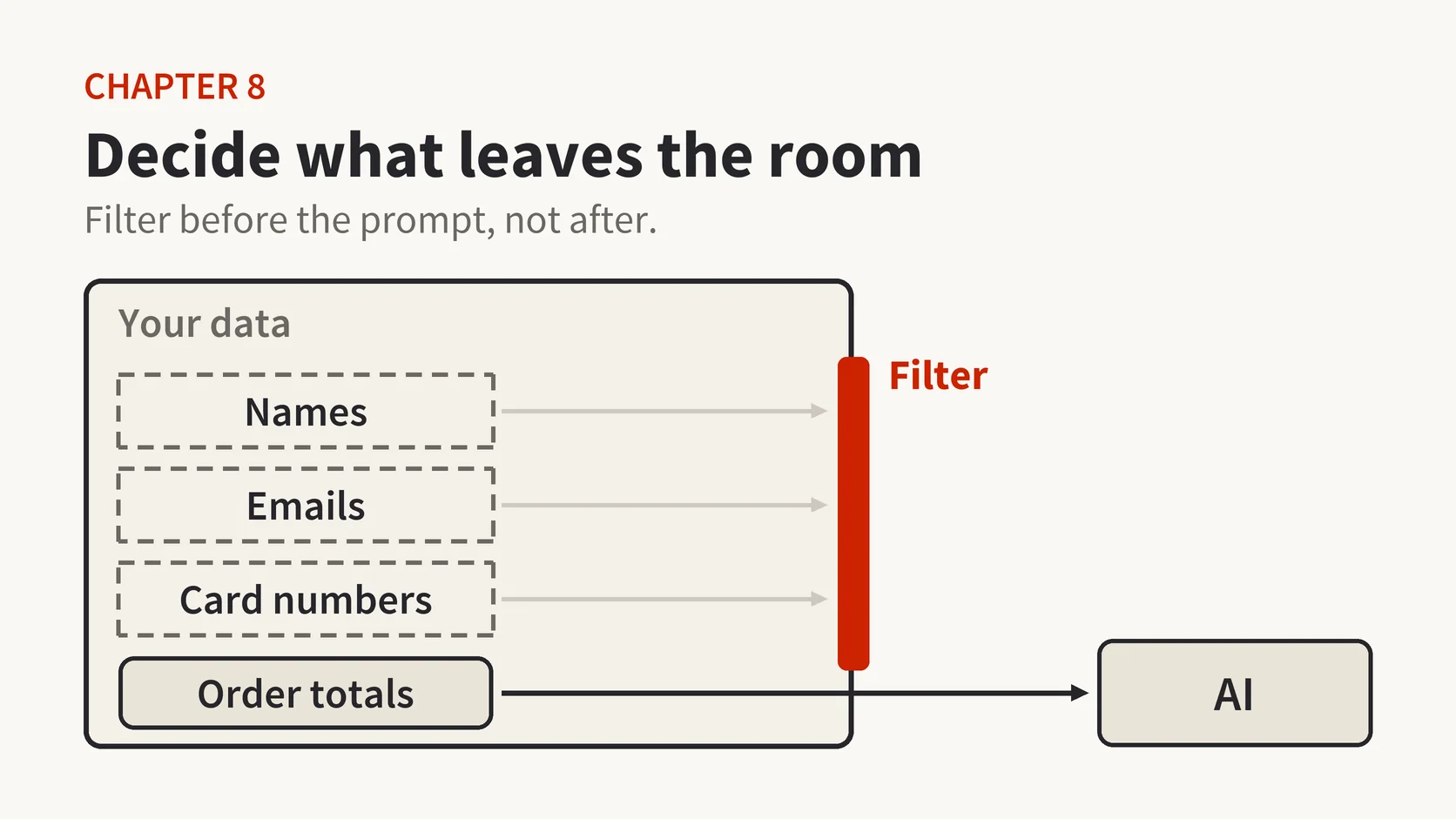
Everything in the request: your prompt, any files or rows you attached, the conversation history and the tool’s own instructions. With a cloud service, all of it travels to the vendor’s servers. What happens next depends on the vendor’s terms and your settings.
Why it matters. Pasting a query result into a chat tool sends those rows to a third party. That can break a contract or a privacy law, even when nobody meant any harm.
Watch out. Attachments and screenshots count too. A screenshot of a customer record is personal data in picture form.
3. Masking, anonymizing or pseudonymizing?
Masking hides or replaces sensitive values, such as showing only the last four digits of a card. Pseudonymizing replaces identifiers with a consistent code, so a key kept elsewhere can link back. Anonymizing removes the link so nobody can reasonably re-identify the person.
Why it matters. Privacy laws treat them differently. Pseudonymized data is usually still personal data, because someone holds the key. Anonymized data usually isn’t.
Watch out. Anonymization is harder than it looks. Removing names isn’t enough when the remaining columns can pick out one person.
4. Does masking in the database protect what AI sees?
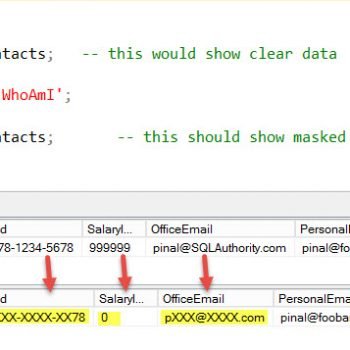
Only if the AI reads through the mask. Dynamic masking hides values from users who lack permission to see them. If the AI tool connects with an account that can see the real values, the mask does nothing.
What the interviewer wants. The AI tool’s account is what matters. An agent writes its own queries, so give it a view without the column instead of a mask.
Watch out. Dynamic masking isn’t encryption. Clever queries against a masked column can sometimes reveal the real values. Treat it as one layer of several.
5. What should never go into a prompt?
Passwords, keys and connection strings, always. Personal or regulated data, unless the tool is approved, safeguards are in place and the law or consent allows it. And anything your contract says stays inside.
Why it matters. Once text is sent, you can’t take it back. The safest data is the data you never sent.
Watch out. Summaries aren’t automatically safe. “Summarize this complaint from Alex Smith at 12 Oak Street” still sends the name and the address.
Five minutes, any AI assistant
Everything in this note is made up, so it’s safe to paste. Ask an assistant to clean it:
Remove all personal data from this note, then list what you removed. Note: Called Sam Walker about order 55172. They moved to 14 Elm Road, Austin, and their new number is 555-0142. Their child turns 8 on May 3, so deliver before then.
The name, the street and the phone number are the easy ones. Did it catch all three? Did it notice that a child’s age and birthday is personal data about a second person who never agreed to anything?
That last one is what separates a careful answer from a confident one.
Why this is worth a book
Chapter 8 has ten questions. It also covers finding sensitive data before you share it, and what to check in a vendor’s data terms. Then when a local model makes sense, synthetic data, and the Senior question of whether prompts and answers should be logged at all.
100 AI Interview Questions and Answers for Data Professionals is in Kindle (also on Amazon.in), paperback and audiobook.
Part nine is the chapter where your years of data work become the advantage.
A prompt is not a conversation, it is a data transfer.
Published by Pinal Dave on SQLAuthority. More of my work at pinaldave.com.
Discover more from SQL Authority with Pinal Dave
Subscribe to get the latest posts sent to your email.