
The first customer fits neatly into one database. With multiple customers, tenant boundaries become a design decision that affects security, backups, and every query.
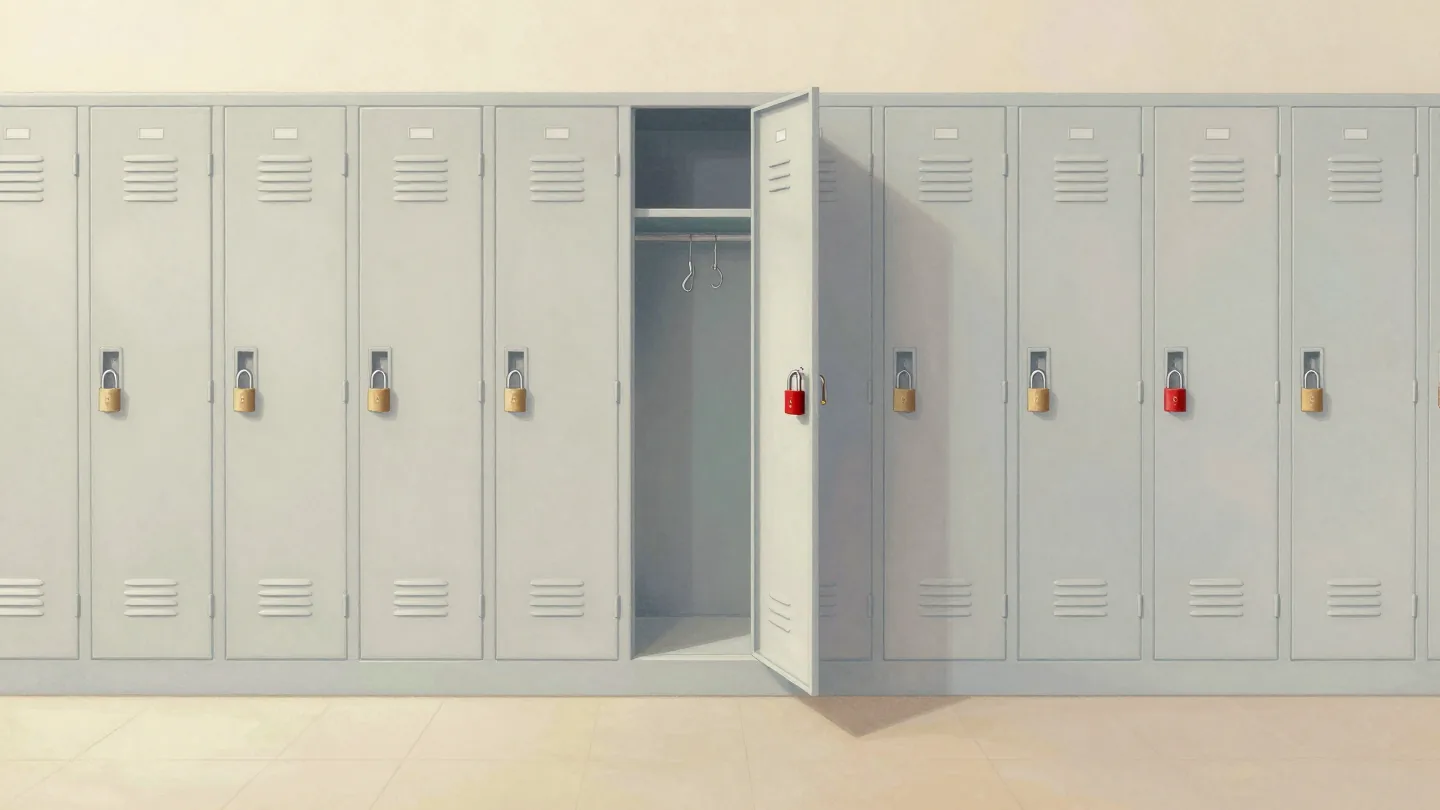
Define the Boundary Between Multiple Customers First
A tenant is a customer whose data and operations need a clear boundary. Decide whether the application must isolate reads, writes, performance, encryption keys, retention, or restore operations. These are different requirements. A TenantId column solves one kind of separation but not every kind.
I ask what happens when one customer requests a restore of only their data. In a shared table, that is a careful data operation. In a separate database, it can be closer to a database restore. That question makes the architecture tradeoff concrete.
Write down expected tenant count, size distribution, and noisy-neighbor risk. A design for a few large customers differs from one for thousands of tiny ones. Do not choose from a diagram without the workload.
SELECT TenantId, COUNT_BIG(*) AS OrderRows
FROM dbo.Orders
GROUP BY TenantId
ORDER BY OrderRows DESC;
Share Tables for Multiple Customers When Operational Simplicity Matters
Shared tables put all tenants in one schema, with TenantId included in tenant-owned rows. This keeps one schema deployment and can use shared capacity efficiently. It also makes every key, query, index, and report responsible for tenant filtering.
Use composite uniqueness where a business key is unique only inside one tenant. CustomerCode alone can be reused by different tenants. A unique key on TenantId and CustomerCode captures the real rule. Foreign keys should prevent cross-tenant references, not merely point at an ID that is globally unique.
I review queries for missing tenant predicates and test them under the actual application identity. Row-level security can provide a database enforcement layer, but it needs careful design and testing. An application WHERE clause alone is not a security boundary.
CREATE UNIQUE INDEX UX_Customer_Tenant_Code
ON dbo.Customer(TenantId, CustomerCode);
Use a Schema per Tenant Selectively
Separate schemas can group each tenant’s objects inside one database. They offer naming separation, but deployments must repeat schema changes for every tenant. Cross-schema permissions and object creation become operational work. A large tenant count can make catalogs and release scripts unwieldy.
I ask whether tenants genuinely need different table shapes. If all tenants use the same structure, a schema per tenant can duplicate objects without buying useful flexibility. If controlled tenant-specific modules are required, it can be a reasonable middle ground.
Backups and transaction log remain database-wide. A schema boundary does not give an independent recovery point. One customer’s heavy query can still compete for shared database resources. Name those limits in the design review.
SELECT s.name AS schema_name, COUNT(*) AS table_count
FROM sys.schemas AS s
JOIN sys.tables AS t ON t.schema_id = s.schema_id
GROUP BY s.name
ORDER BY table_count DESC;
Use a Database per Tenant for Stronger Isolation
A separate database gives each tenant its own schema deployment, backup and restore boundary, and database-level settings. It can help with data residency and custom retention. The cost is many databases to monitor, patch, migrate, back up, and keep on compatible versions.
I test one complete lifecycle: create a tenant, apply a schema release, back up, restore, rotate credentials, and retire the tenant. If that workflow is manual, the design can become expensive as tenant count grows. Automation and inventory are part of the architecture.
Separate databases do not automatically isolate every server resource. Databases on one instance still share CPU, memory, and storage. A large customer can still affect neighbors unless capacity and placement are planned.
SELECT name, state_desc, create_date
FROM sys.databases
WHERE database_id > 4
ORDER BY name;
Price Operations as Well as Storage for Multiple Customers
Compare the steady cost of compute and storage with the human cost of deployment, incident response, and tenant-specific recovery. A shared database can be cheap to host but costly to restore one customer’s rows. Separate databases can simplify recovery but multiply maintenance jobs.
I estimate from representative tenant sizes and peak overlap, then validate with a pilot. Avoid invented cost numbers. Use actual resource metrics and the platform’s current pricing. The operating design should explain how a new tenant changes both capacity and administration work.
Watch backup windows, index maintenance, and monitoring cardinality. A job that runs once for a shared database can run across hundreds of tenant databases. A small per-database task becomes a large schedule.
SELECT DB_NAME(database_id) AS database_name,
       SUM(size) * 8.0 / 1024 AS allocated_mb
FROM sys.master_files
WHERE database_id > 4
GROUP BY database_id
ORDER BY allocated_mb DESC;
Keep Tenant Identity in Every Data Path
Imports, exports, caches, and reports need the same tenant boundary as transactional queries. A shared table can be protected in one query but leaked through a report that forgot TenantId. A separate database can still send data to the wrong storage path or email recipient.
I put tenant identity in run logs and file receipts. That makes support and replay safer. It also lets an operator see whether an unusual count belongs to one customer or the whole system. The identity should be validated at the entry point and carried through each handoff.
Test cross-tenant negative cases across multiple customers. A user for tenant A should not read, update, export, or infer tenant B’s rows. Successful tenant A tests alone cannot prove isolation. Use representative identities and deliberately wrong keys.
Choose a Model You Can Operate
A hybrid can work: small tenants in shared tables and large or regulated tenants in separate databases. That adds routing and migration complexity, so define criteria before adopting it. Moving a tenant between models should have a tested path if the product promises it.
I prefer the simplest model that meets isolation and recovery requirements at expected scale. Make the tradeoff explicit: shared tables lower object count, separate databases strengthen operational boundaries, and schemas sit between with their own limits. None is universally best.
Revisit the choice when tenant sizes or contracts change. The database design is a promise about how customer data is separated and recovered. That promise must survive real releases and incidents, not only a clean diagram.
Tenant boundaries need tests at the point where data is read and written. A WHERE TenantID = @TenantID clause can be omitted in one new query, so centralize the rule where the architecture permits it and review every access path. Which staff roles can cross tenant boundaries for support, and how is that access recorded? I make that exception explicit instead of letting it live in an administrator login.
Plan for growth across multiple customers and their export requirements early. A shared table can be efficient, but noisy workloads and very large tenants can change the tradeoff. Define how a tenant is restored, deleted, or moved without exposing another tenant’s data. Foreign keys should include the tenant boundary where needed to prevent cross-tenant references. Test those rules with two tenants that use the same local identifiers.
Related reading on this blog: Implementing Row-Level Security (RLS) and Automating SQL Server Deployments Across Multiple Databases Using Python.

Tenant design is not just a table layout, it is a promise about isolation and operations.
Published by Pinal Dave on SQLAuthority. More of my work at pinaldave.com.
Discover more from SQL Authority with Pinal Dave
Subscribe to get the latest posts sent to your email.




1 Comment. Leave new
Hi Pinal, thats indeed amazing..you are really a pioneer of SQL server…Can you please add or update more interview questions based on sql 2008?