How blogging has changed is the story of one garden that kept changing its shape. It began as seedlings in pots and became a greenhouse, then a crowded market. Now it also arrives as a bouquet at your door. The plants are the same kind they always were.
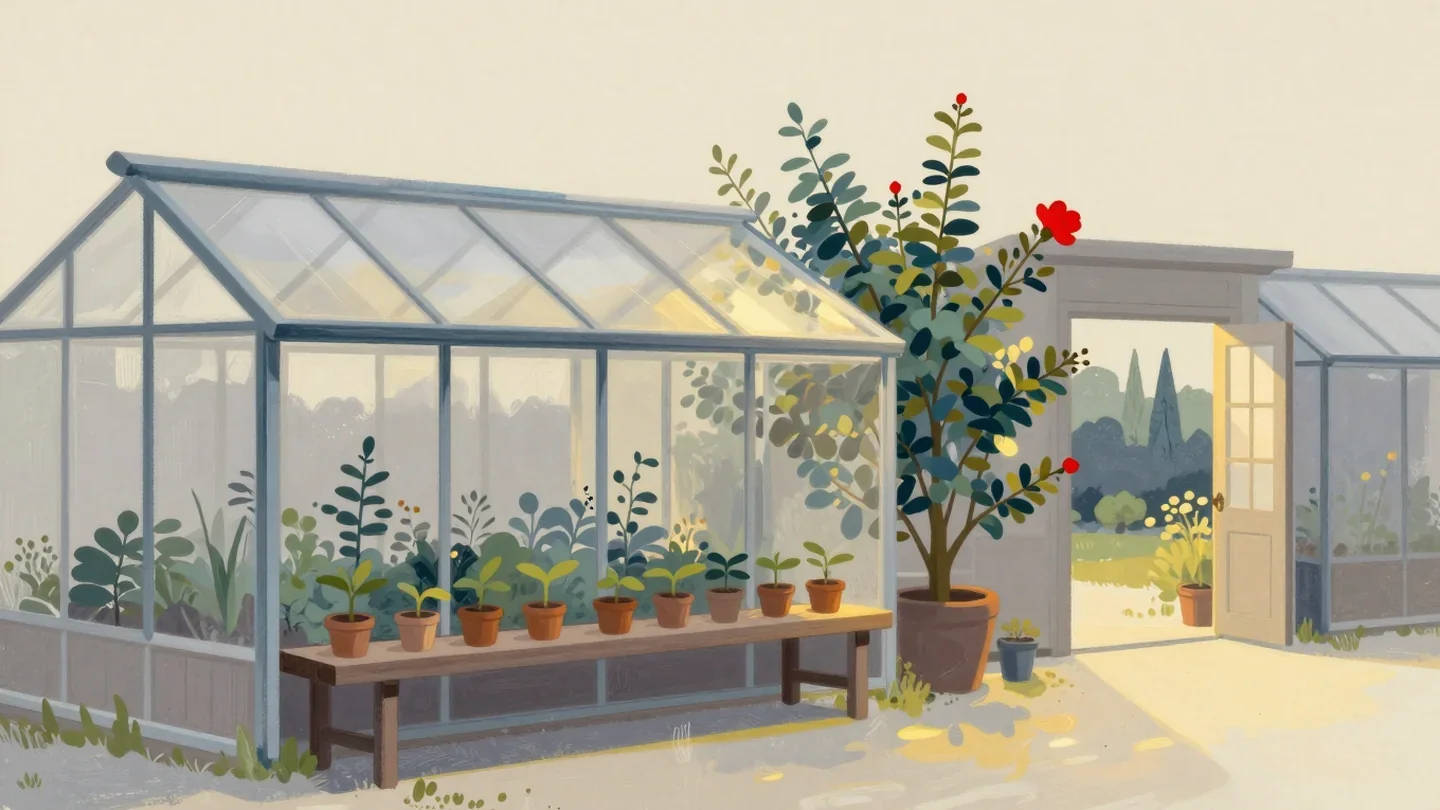
Seedlings: The Online Diary
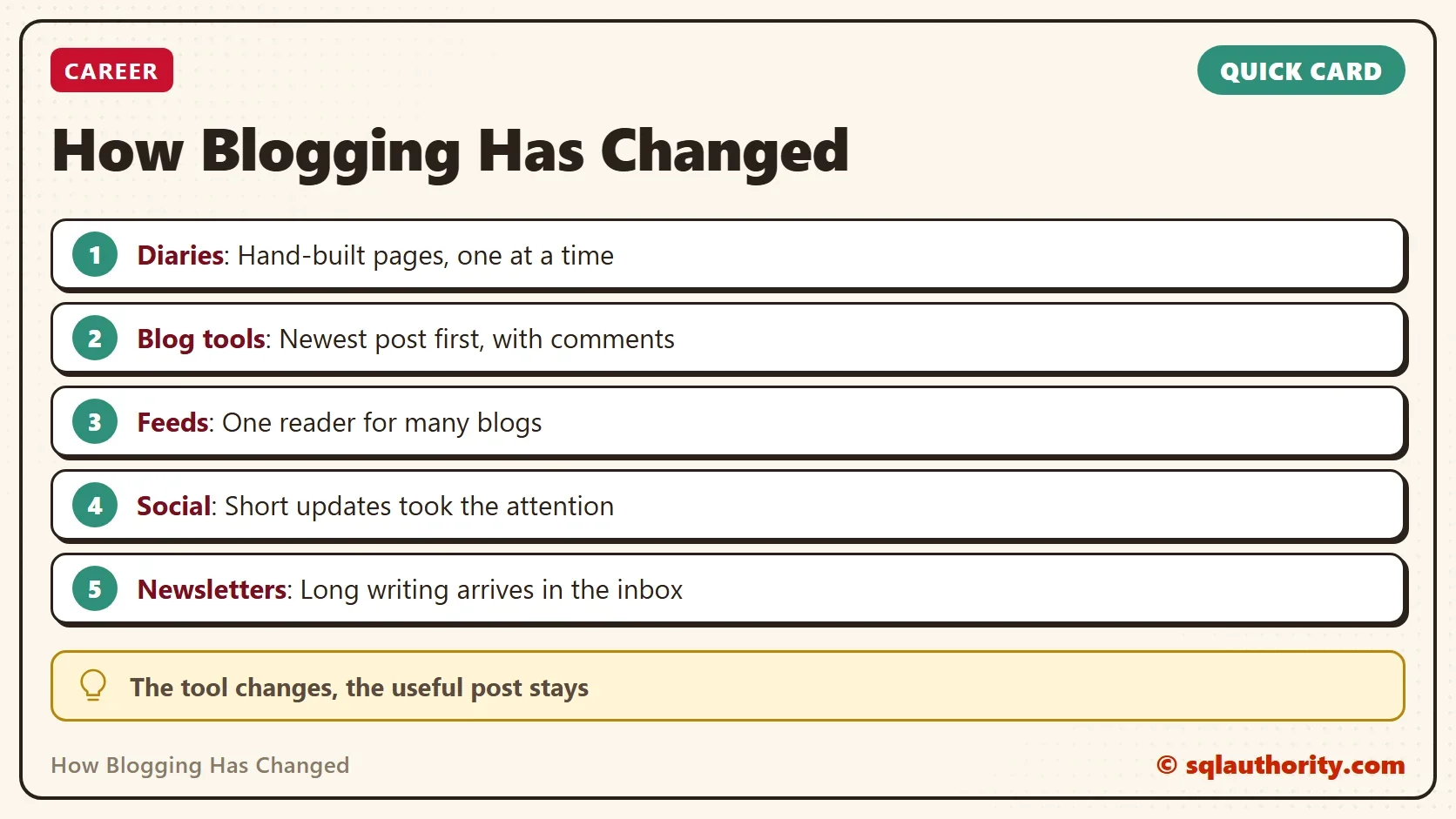
The early web was a place where you planted by hand. You wrote a page in a text editor, uploaded it, and wrote the next one the following week. Some of those pages were diaries. A person described the day, a hobby or a worry, and hoped that someone would wander past.
Nothing about this was easy. Every new entry meant editing the page, fixing the links and uploading again. Some gardeners gave up when the pots got heavy. The ones who kept going learned an early lesson: writing regularly matters more than writing perfectly.
The Greenhouse: Blog Software
Then came tools that built the greenhouse for you. You typed into a box and pressed a button. The newest entry went to the top. Older ones moved down into an archive. Every entry got its own address. A reader could point to one post and say, read this one.
Categories and tags sorted the shelves. Comments let visitors write back, so the garden had conversation as well as plants. A post stopped being a finished page and became the start of a talk. For some writers, the comments were the first proof that a stranger had read the work.
Paths Between Gardens: Feeds and Readers
A garden is easy to love and hard to visit every day. Feeds solved that. A feed, usually called RSS, is a small file that lists the newest posts. A feed reader gathered the feeds of many blogs into one list, like a path that passes every garden gate. You no longer had to remember where to look. New posts came to you. That is a big part of how blogging has changed: the reader stopped hunting and started receiving.
Writers linked to each other in lists of favorite blogs, and readers followed those links from garden to garden. This was a slower web. A good post could travel for years because someone had linked it on a shelf of recommendations.
The Market: Short Posts and Shared Updates
Later, the crowd moved to the market square. Social networks made sharing a one-step action, and short updates replaced long posts for some people. Writing a few lines took a minute, and a reply came within the hour. The greenhouse looked slow beside that.
Some gardens went quiet. Others learned to live in both places, planting in the greenhouse and showing the flowers in the market. Podcasts and videos also opened new stalls, for people who preferred to talk rather than type. Writing was no longer the only way to share what you knew.
The Bouquet: Newsletters and Long Form
Some readers grew tired of the crowd and the pace. They wanted fewer voices, written with more care. Long form writing came back, and the email newsletter became a way to deliver it. A newsletter is a bouquet cut from the garden and left at the door.
The change is as much about ownership as format. A writer who keeps an address list can reach readers without depending on a market square that rearranges itself. Readers like the quiet, too. A newsletter arrives when you are ready for it, and it waits until you are.
What Has Not Changed
Look at every era of how blogging has changed, and the same few things keep the garden alive. The writing is useful to someone, and it says what the writer knows. It is honest about what the writer does not know. It appears on a regular rhythm that readers can count on. None of these needs a new tool.
Search changed how readers arrive, and a useful post from years ago can still be found today. That is a gift the market square never gave. Posts in the garden keep growing after you plant them, because someone finds them on the right afternoon.
You could argue that blogging is over, since the crowd has left for other places. Look at what the crowd left behind. The writing, the archives, the comments and the habit of explaining things carefully all stayed. The shape changed. The purpose did not.
What to Remember
Choose the format that fits the writing and the reader. It can be a page, a post, a short update or a newsletter. Keep the garden in a place you control, and share the flowers anywhere. How blogging has changed matters less than what stayed the same. Write something useful, honest and regular.
A blog is not a platform, it is a habit of explaining things to one reader.
Published by Pinal Dave on SQLAuthority. More of my work at pinaldave.com.
Discover more from SQL Authority with Pinal Dave
Subscribe to get the latest posts sent to your email.